MEDIDENT · CURRICULUM & CLINICAL INFORMATION
Surgical Management
Surgical and operative procedures represented in the dental curriculum evidence. The procedures a clinician may provide depend on their specialist qualifications, competence and applicable regulations.
Related dental speciality: Oral and Maxillofacial Surgery, Endodontics, Periodontics, Pedodontics and Prosthodontics
Body regions covered in surgical management
The oral cavity and stomatognathic system; upper and lower jaws; maxillofacial skeleton; facial bones and soft tissues; salivary glands; temporomandibular joints; and cranio-maxillofacial structures. The DCI Oral and Maxillofacial Surgery evidence below also identifies cleft lip and palate, facial injuries, orthognathic procedures and reconstructive and oncological surgery topics. Other dental specialties contribute procedures in their respective fields, as shown by the individual curriculum evidence.
Evidence: See the original DCI curriculum screenshots and explanations directly below. Each screenshot is retained as supplied. The curriculum level and individual practitioner’s qualifications, competence and applicable regulations determine professional scope.
Curriculum evidence · Surgery
Oral & Maxillofacial Surgery: Diagnosis and Management of Cranio-Maxillofacial Diseases, Injuries and Conditions
The DCI course content for the specialty of Oral & Maxillofacial Surgery states that it deals with the diagnosis and management of diseases of the stomatognathic system, jaw bones, cranio-maxillofacial region, salivary glands and temporomandibular joints. It also describes the specialty’s role in managing traumatic injuries of the maxillofacial skeleton, cleft lip and cleft palate, orthognathic surgery, microvascular surgery, and reconstructive and oncological surgical procedures of the maxillofacial region.
What the DCI specialty course content specifically identifies:
- Diseases of the stomatognathic system and jaw bones
- Diseases involving the cranio-maxillofacial region
- Salivary gland and temporomandibular joint conditions
- Traumatic injuries of the maxillofacial skeleton
- Cleft lip and cleft palate
- Orthognathic surgery
- Microvascular and reconstructive surgery
- Oncological surgical procedures of the maxillofacial region
The DCI text also describes Oral & Maxillofacial Surgery as a multidisciplinary specialty requiring coordination with neurosurgeons, oncological surgeons, ophthalmologists, ENT surgeons and plastic surgeons. It states that a minimum of three years of formal specialty training is intended to equip the trainee to practise basic oral and maxillofacial surgery competently and pursue further advanced training.
Original DCI curriculum screenshot – Curriculum evidence (Course Content: Oral & Maxillofacial Surgery)
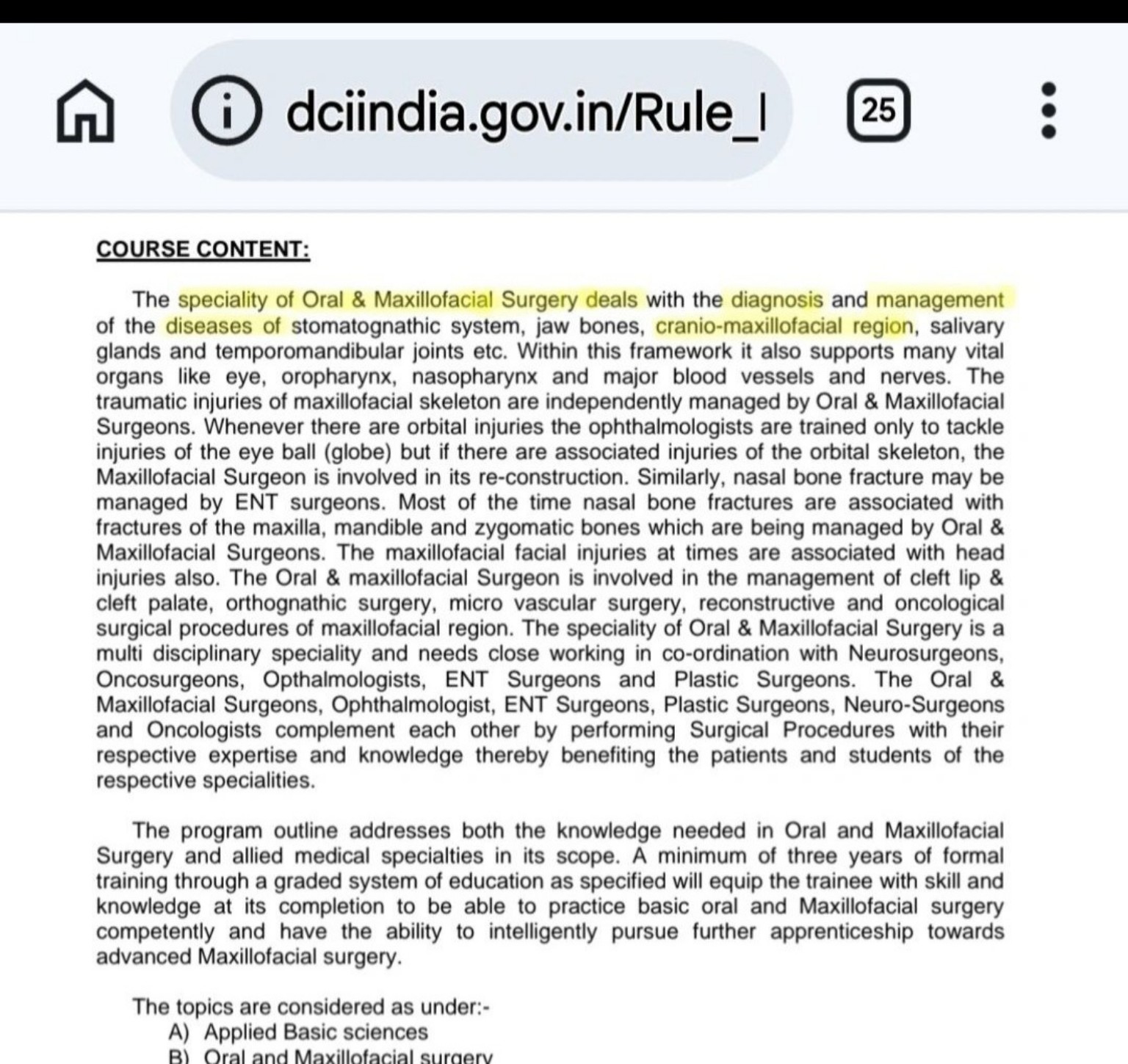
Scope clarification: This evidence describes the specialty curriculum and training in Oral & Maxillofacial Surgery. It should not be read as stating that every BDS graduate is independently trained or qualified to perform all of the advanced specialist procedures listed above.
Curriculum evidence · Anatomy
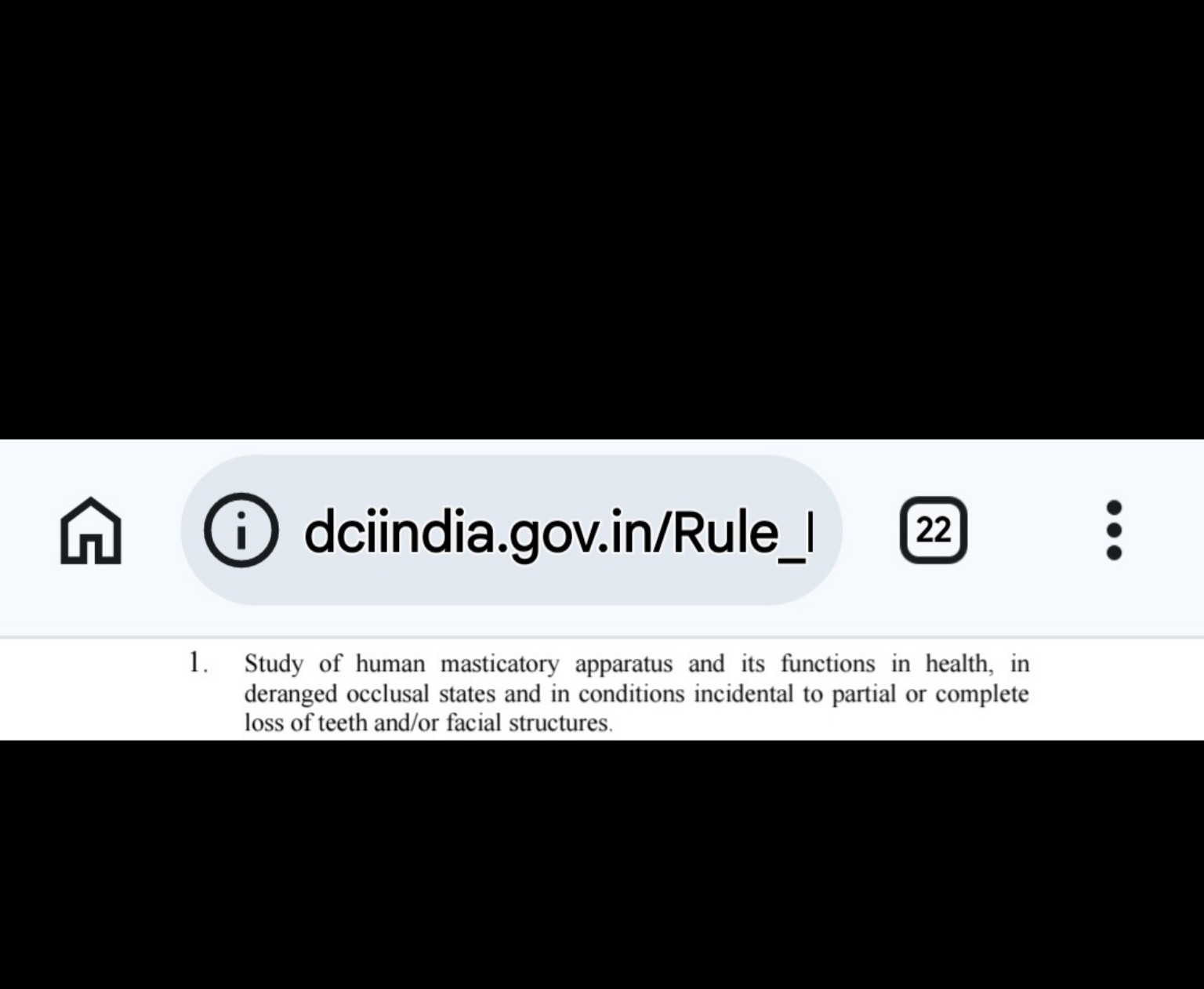
Dental Curriculum: Human Masticatory Apparatus and Facial Structures
The DCI curriculum includes the study of the human masticatory apparatus and its functions in health, in deranged occlusal states, and in conditions incidental to partial or complete loss of teeth and/or facial structures.
Original DCI curriculum screenshot – Curriculum evidence
Curriculum evidence · Anatomy
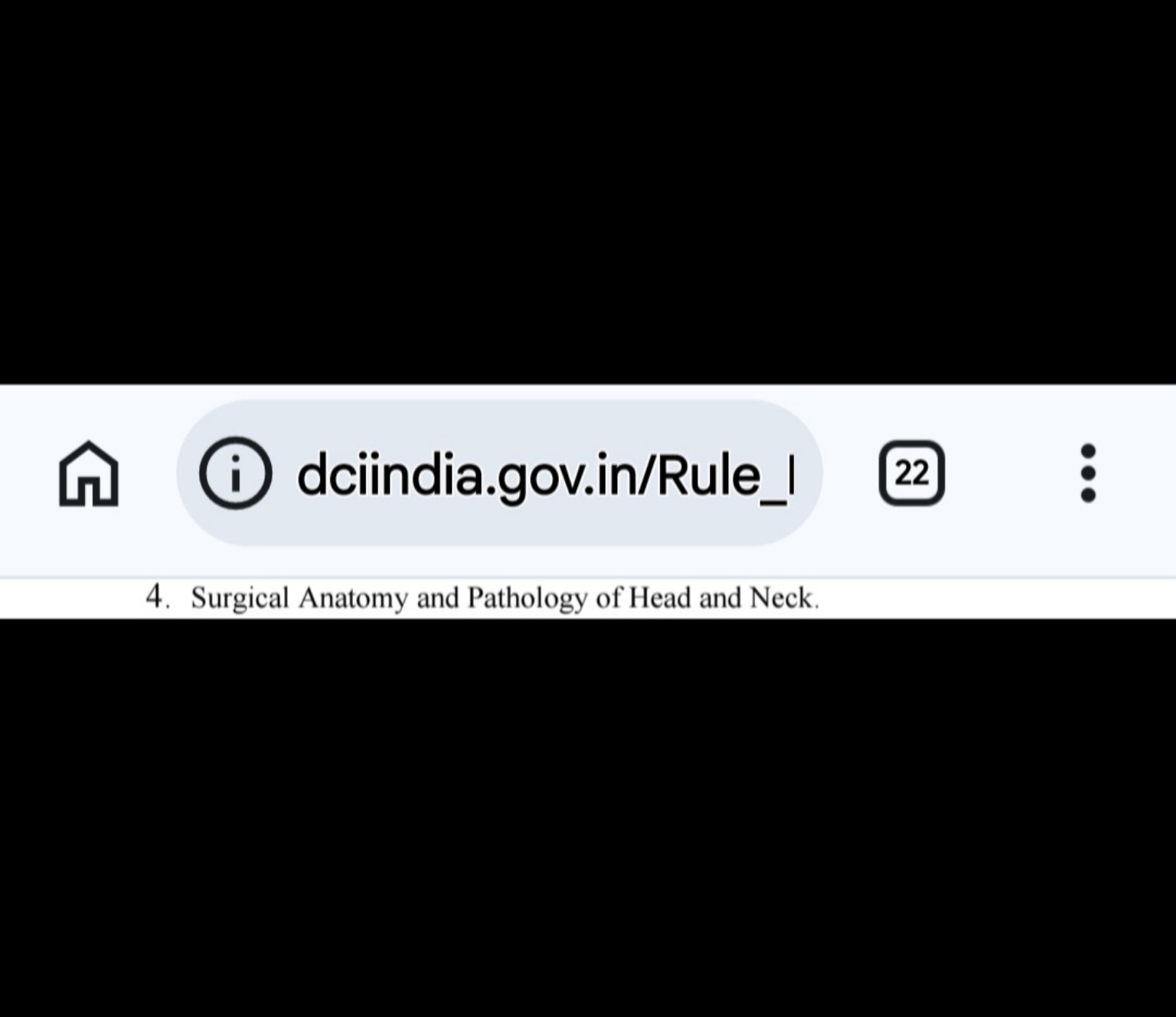
Dental Curriculum: Surgical Anatomy and Pathology of the Head and Neck
The DCI syllabus excerpt explicitly lists Surgical Anatomy and Pathology of Head and Neck as a subject area.
Original DCI curriculum screenshot – Curriculum evidence
Curriculum evidence · Surgery
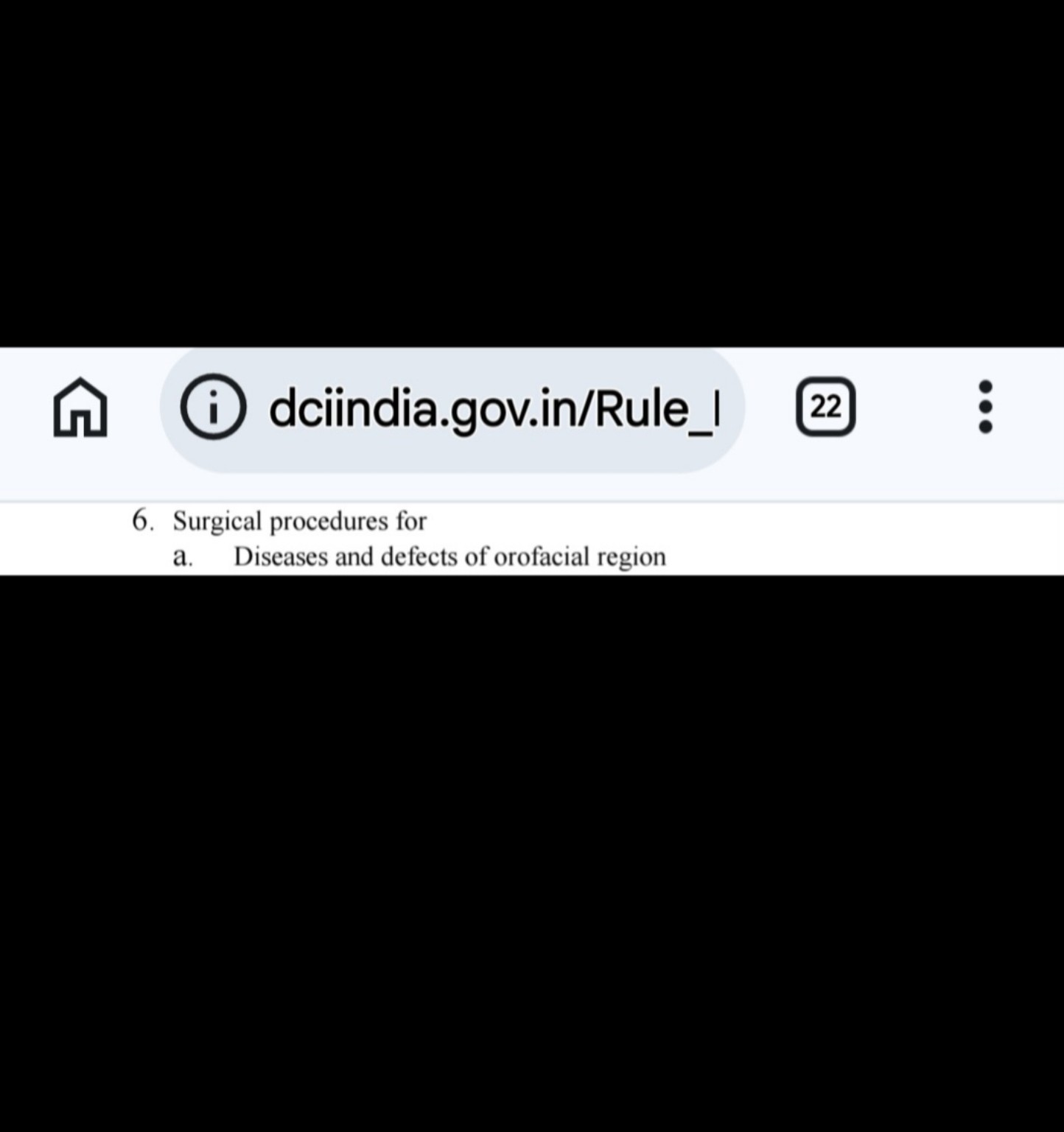
Dental Curriculum: Surgical Procedures for Orofacial Diseases and Defects
The DCI syllabus excerpt lists surgical procedures for diseases and defects of the orofacial region.
Original DCI curriculum screenshot – Curriculum evidence
Curriculum evidence · Surgery
Oral and Maxillofacial Surgery: Diagnosis, Treatment Planning and Surgical Management
The DCI Oral and Maxillofacial Surgery syllabus excerpt describes training objectives in knowledge, skills, attitude, communication and research. The stated skills include clinical history-taking, examination, diagnostic procedures, laboratory tests, diagnosis, treatment planning, minor oral surgical procedures, common maxillofacial surgery and care of maxillofacial surgery patients.
Original DCI curriculum screenshot – Curriculum evidence
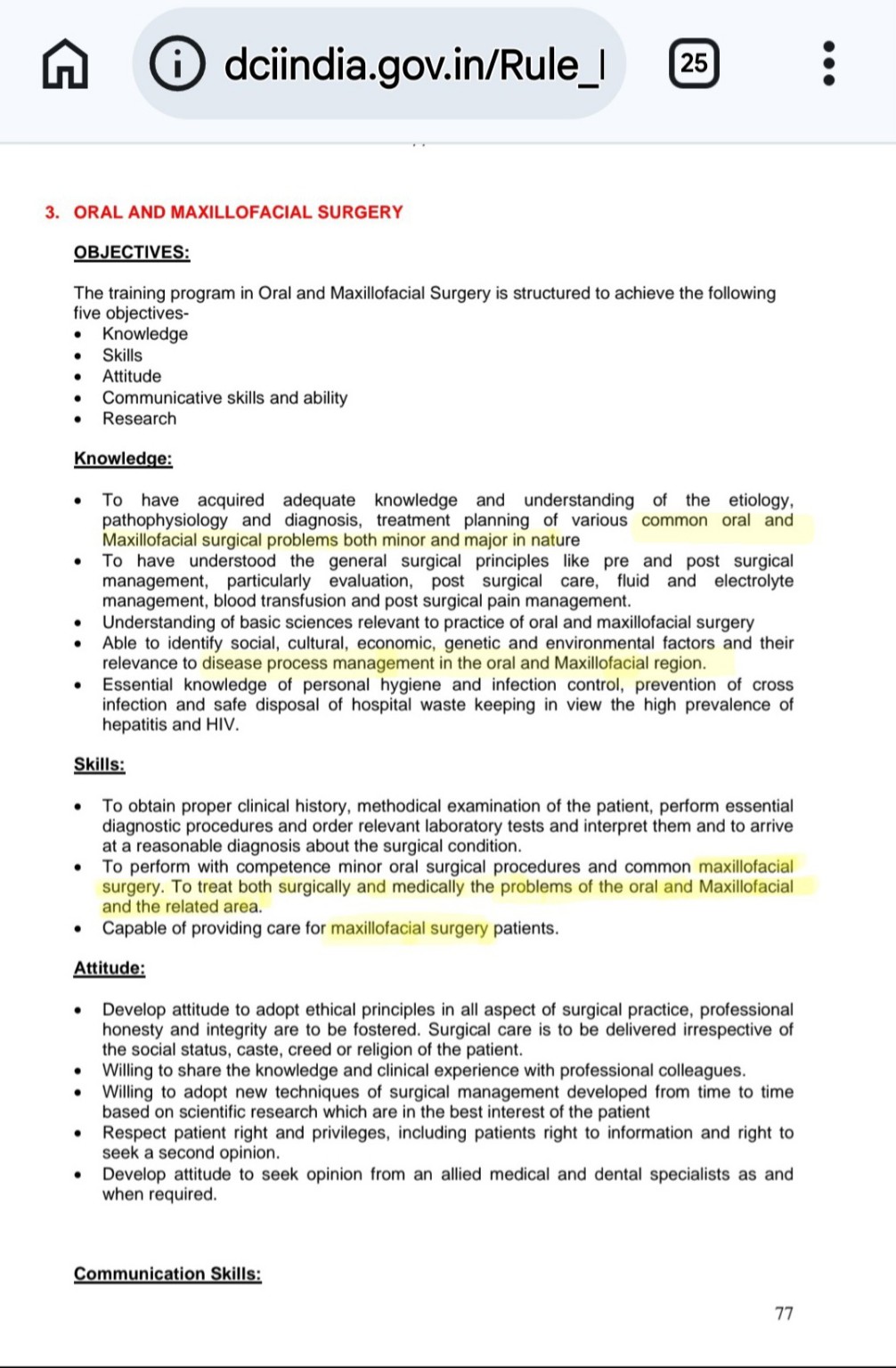
Scope clarification: This screenshot documents the stated postgraduate specialty syllabus content. It should not be interpreted as evidence that every BDS graduate has completed the same postgraduate training or is independently qualified to perform every specialist procedure.
Official curriculum source: Dental Council of India. Refer to the applicable BDS or MDS curriculum and regulations for the precise course, level and scope of each syllabus excerpt.
Back to all evidenceCurriculum evidence · Surgery
Surgical Access to the Facial Skeleton: Intraoral and Extraoral Incisions and Operative Techniques
The supplied DCI syllabus excerpt lists intraoral mucoperiosteal flaps and incisions, methods of bone removal, and the use of burs, chisels and osteotomes. It also describes extraoral skin incisions used to expose the facial skeleton, including submandibular and preauricular approaches, incisions to expose the maxilla and orbit, and the bicoronal incision. The excerpt further lists control of haemorrhage during surgery, drainage and debridement.
Original DCI curriculum screenshot – Curriculum evidence (Surgical Access and Operative Techniques)
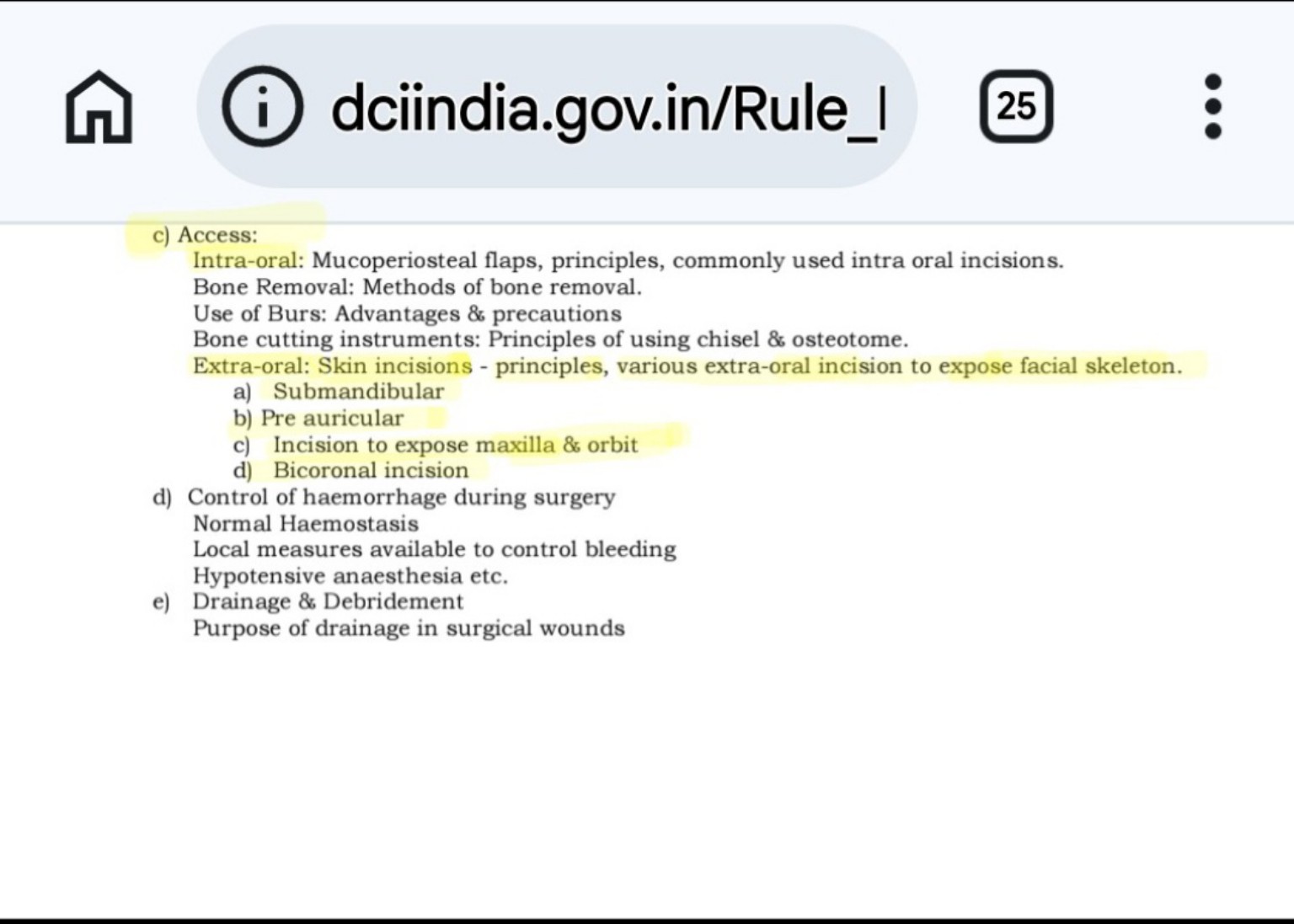
Scope clarification for Evidence Nos. 20–22: These screenshots document the syllabus topics and stated training objectives visible in the supplied DCI excerpts. A curriculum listing alone does not establish that every BDS graduate has the same level of competence, that every procedure may be performed independently, or that a particular practitioner is authorized to perform it. Clinical scope depends on the applicable qualification, supervised training, demonstrated competence and current regulatory requirements.
Official curriculum source: Dental Council of India. Refer to the applicable curriculum and regulations for the exact course and level represented by each excerpt.
Back to all evidenceUnderstanding curriculum evidence
These original curriculum excerpts illustrate subjects, training objectives or procedures included in the cited dental curriculum. They do not establish that every dentist has the same specialist qualification or is authorised to perform every procedure. A patient’s care should be provided by a clinician whose qualifications, training, competence and applicable regulations match the treatment required.

