MEDIDENT · CURRICULUM & CLINICAL INFORMATION
Clinical Diagnosis
Clinical assessment and diagnosis of oral, orofacial and related disorders, supported by curriculum evidence.
Related dental speciality: Oral Medicine
Body regions covered in clinical diagnosis
The oral cavity and its mucosa; teeth and jaws; the orofacial region; facial structures and pain-related regions; and head-and-neck lymph nodes where specifically described in the Oral Medicine curriculum. The evidence below includes diagnosis of orofacial disorders and Oral Medicine diagnostic training.
Evidence: See the original DCI curriculum screenshots and explanations directly below. Each screenshot is retained as supplied. The curriculum level and individual practitioner’s qualifications, competence and applicable regulations determine professional scope.
Curriculum evidence · Diagnosis
Diagnosis of Oro-Facial Disorders
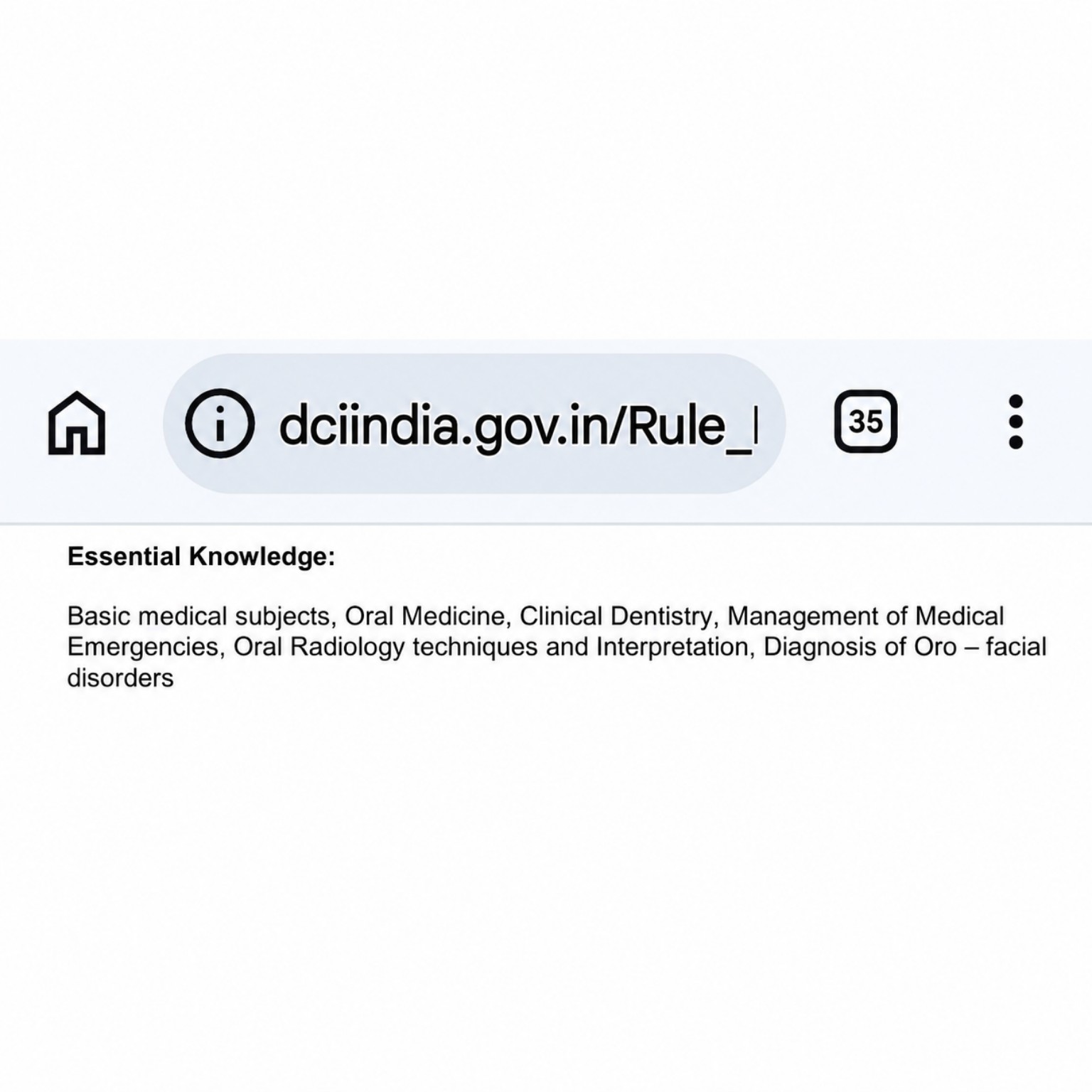
The DCI curriculum lists “Diagnosis of Oro-facial disorders” under Essential Knowledge, alongside basic medical subjects, Oral Medicine, Clinical Dentistry, management of medical emergencies, and oral radiology techniques and interpretation. This screenshot documents the inclusion of oro-facial disorder diagnosis in the curriculum’s stated essential knowledge.
Original DCI curriculum screenshot – Curriculum evidence
Curriculum evidence · Diagnosis
Oral Medicine and Radiology: Clinical and Diagnostic Training in Maxillofacial Diseases
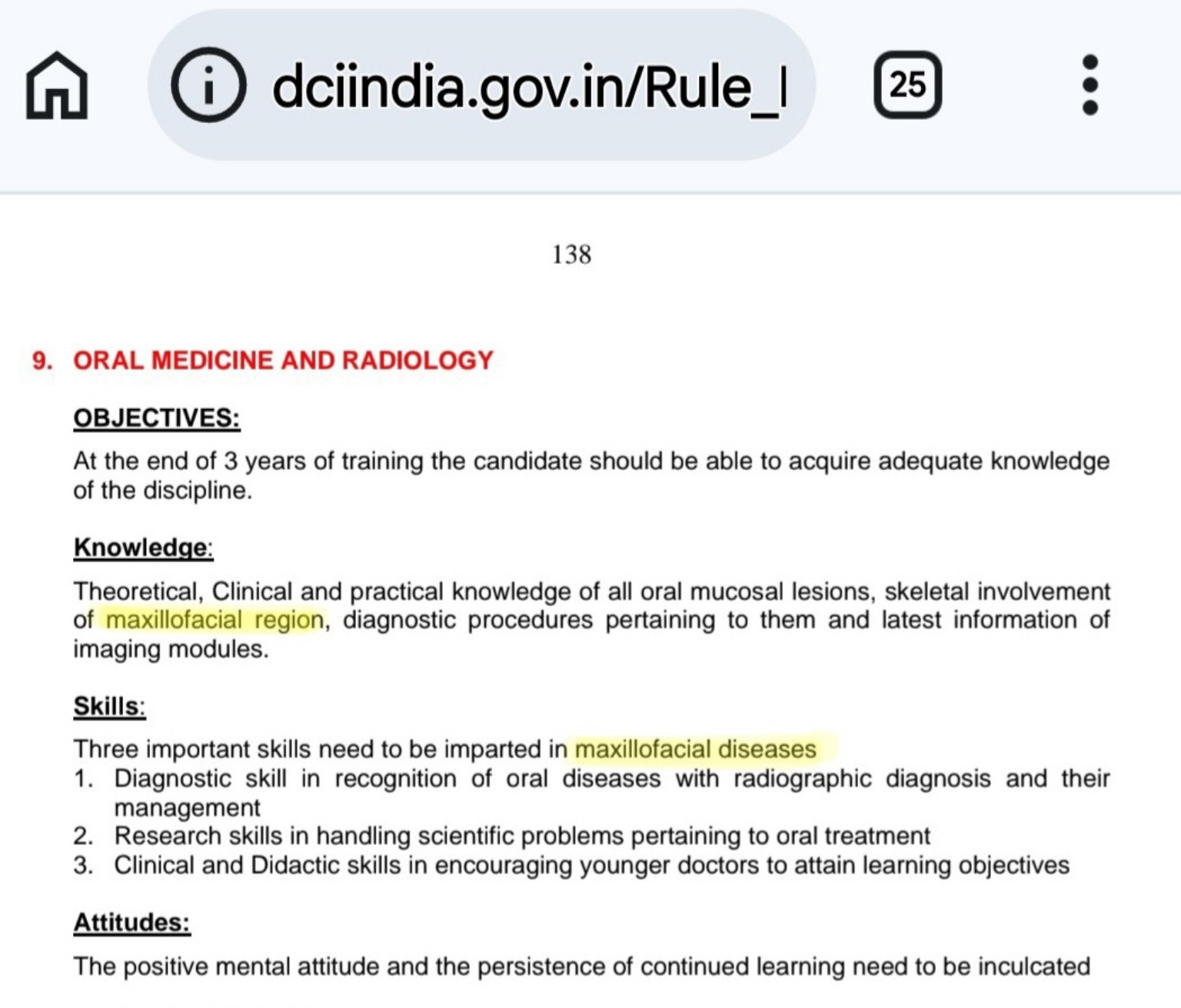
The DCI Oral Medicine and Radiology syllabus excerpt describes theoretical, clinical and practical knowledge of oral mucosal lesions, skeletal involvement of the maxillofacial region, diagnostic procedures and imaging modules. It also identifies diagnostic skills involving radiographic diagnosis and management of oral diseases.
Original DCI curriculum screenshot – Curriculum evidence
Scope clarification: This screenshot documents the stated postgraduate specialty syllabus content. It should not be interpreted as evidence that every BDS graduate has completed the same postgraduate training or is independently qualified to perform every specialist procedure.
Understanding curriculum evidence
These original curriculum excerpts illustrate subjects, training objectives or procedures included in the cited dental curriculum. They do not establish that every dentist has the same specialist qualification or is authorised to perform every procedure. A patient’s care should be provided by a clinician whose qualifications, training, competence and applicable regulations match the treatment required.

